
What curse did Jesus crown of thorns destroy?

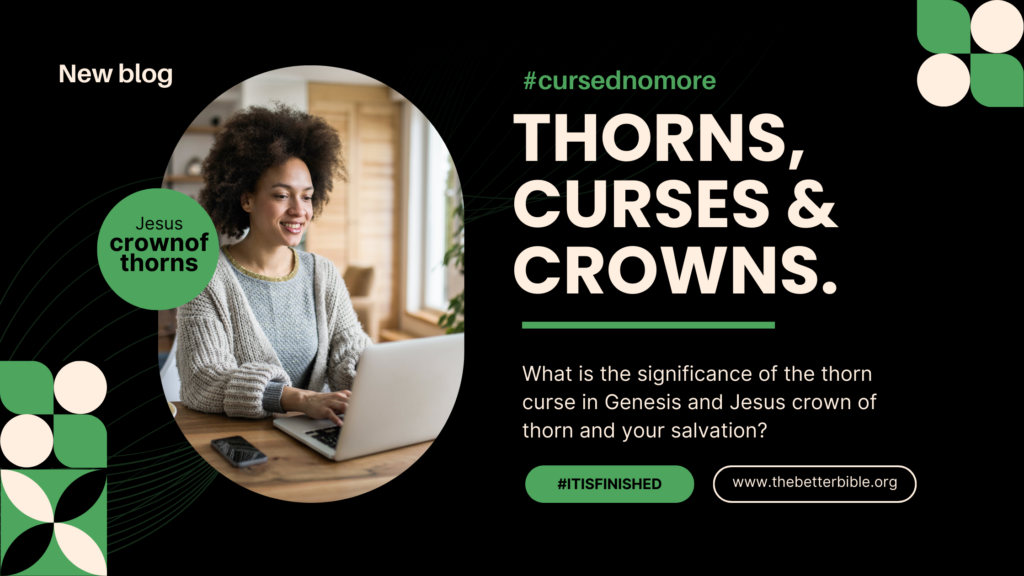
From Cursed Thorns to a Crown of Victory: Understanding the Symbolism of Thorns in the Bible
The Bible is a tapestry woven with deep symbolism, and one of the most poignant symbols is that of thorns. In Genesis, thorns and thistles are a direct result of sin, symbolizing the curse that fell upon creation due to Adam and Eve’s disobedience. Fast forward to the New Testament, and we see Jesus adorned with a crown of thorns during His crucifixion. This article explores the profound connection between the cursed ground of Genesis and the crown of thorns placed on Jesus’ head, revealing how Jesus’ sacrifice redeems us from the curse and ushers us into the blessings of the new covenant.
The Genesis Curse: Thorns and Thistles
The Fall of Man:
In Genesis 3, after Adam and Eve disobeyed God by eating from the Tree of the Knowledge of Good and Evil, a series of curses were pronounced. One of the most striking is the curse on the ground: “Cursed is the ground because of you; through painful toil you will eat food from it all the days of your life. It will produce thorns and thistles for you, and you will eat the plants of the field” (Genesis 3:17-18).
Symbolism of Thorns and Thistles:
Thorns and thistles represent the consequences of sin—pain, struggle, and unfruitfulness. The ground, which was originally a source of sustenance and life, became a source of toil and hardship. This curse extends beyond agriculture; it symbolizes the pervasive impact of sin on all aspects of human existence.
Human Struggle:
The curse of thorns and thistles signifies human struggle and the futility of efforts apart from God. It reminds us that sin brings about separation from God, resulting in a life marked by frustration and fruitlessness.
The Crown of Thorns: Jesus Takes the Curse
The Crucifixion:
In the New Testament, during the crucifixion of Jesus, Roman soldiers mocked Him by placing a crown of thorns on His head (Matthew 27:29, John 19:2). This act was intended to ridicule His claim of kingship, but it carried profound symbolic meaning.
Symbolism of the Crown of Thorns:
The crown of thorns represents the curse of sin that Jesus took upon Himself. Just as thorns and thistles were a result of the curse in Genesis, the crown of thorns placed on Jesus signifies Him bearing the full weight of that curse.
2 Corinthians 5:21 states, “God made him who had no sin to be sin for us, so that in him we might become the righteousness of God.” By wearing the crown of thorns, Jesus symbolically took on the curse of sin, bearing it on our behalf.
Redeeming the Curse:
Galatians 3:13 further explains, “Christ redeemed us from the curse of the law by becoming a curse for us, for it is written: ‘Cursed is everyone who is hung on a pole.'” Jesus’ sacrifice on the cross, marked by the crown of thorns, redeems us from the curse of sin and its consequences.
The New Covenant: From Curse to Blessing
The Finished Work of Christ:
Jesus’ death and resurrection mark the inauguration of the new covenant, a covenant of grace and redemption. Whereas the old covenant highlighted the curse of sin through the law, the new covenant emphasizes the cancellation of sin and the restoration of blessings through Jesus’ finished work.
The Acceptable Year of the Lord:
In Luke 4:18-19, Jesus reads from the scroll of Isaiah, declaring, “The Spirit of the Lord is on me…to proclaim the year of the Lord’s favor.” This proclamation signifies a new era of grace, freedom, and blessing—a stark contrast to the era of curse and struggle.
Under the new covenant, believers are called to live in the reality of Jesus’ finished work. This means rejecting a mindset of curse and embracing the blessings and fruitfulness promised through Jesus. Romans 8:1 declares, “Therefore, there is now no condemnation for those who are in Christ Jesus.”
From Cursed Thorns to Fruitful Living
A New Perspective:
The thorns and thistles of Genesis and the crown of thorns worn by Jesus remind us of the transformative power of His sacrifice. Believers are no longer subject to the curse but are invited to live in the abundance of God’s blessings.
When times get tough, it’s easy to revert to a mindset of curse and struggle. However, the new covenant calls us to a higher perspective. Philippians 4:19 assures us, “And my God will meet all your needs according to the riches of his glory in Christ Jesus.”
Embracing Fruitfulness:
Jesus’ parable of the sower in Matthew 13 illustrates the importance of good soil for producing fruit. As believers, our lives should reflect the fertile soil that receives God’s word and produces a harvest. John 15:5 reminds us, “I am the vine; you are the branches. If you remain in me and I in you, you will bear much fruit; apart from me you can do nothing.”
A Year of Favor:
Jesus’ declaration of the acceptable year of the Lord invites us to live with an expectation of God’s favor and blessing. This doesn’t mean a life free from challenges, but it means approaching life with the assurance that we are under God’s grace and favor.
Conclusion
The connection between the cursed ground of Genesis and the crown of thorns placed on Jesus’ head is a profound illustration of the transformative power of His sacrifice. The thorns and thistles that symbolize the curse of sin and human struggle were taken upon Jesus, who bore the curse for us, redeeming us from its power.
Through Jesus’ finished work, we are invited to live in the reality of the new covenant—a covenant marked by grace, redemption, and blessing. The crown of thorns serves as a powerful reminder that Jesus took on the curse of sin so that we might live in the abundance of His blessings.
As believers, we are called to reject a mindset of curse and struggle and embrace the fruitful, blessed life promised through Jesus. Let us live with the assurance of God’s favor, knowing that through Jesus, the curse has been canceled, and we are now partakers of the new covenant blessings. In Christ, we have moved from a life marked by thorns and thistles to a life of fruitfulness and grace, proclaiming the acceptable year of the Lord in every season.



Responses